In late 2022, two extraordinary things happened.
First, we prepared and submitted an alternative report to the Committee on Economic, Social and Cultural Rights (CESCR) as the Kenya Network of Women and Girls with disabilities. In this process, I had an auspicious opportunity to lead a team of the network members in drafting the section on Climate Change and women with disabilities as a thematic area of focus in the alternative report. While writing the report, we noted a knowledge gap in climate change and women with disability, demonstrated by a lack of research and data. In fact, we documented case studies from women with disabilities to support our arguments in the alternative report since we could not find reports and data to reference. I was also honored present the Network’s oral report to the UN CESCR Committee in March, 2023.
The Second is the passing of My Father. He rested on 25th November 2022, shortly after we had begun working on the CESCR alternative report and the 16 days of Activism against Gender based violence campaign. I had a longer stay in my rural home as we prepared for My Father’s funeral and begun the Christmas holidays shortly after his burial. During this stay, I observed that a lot had changed from my childhood days. A significant one being the lack of fish vendors who used to vend fish in the homesteads as they chanted “kado wei”, a Luo phrase which loosely translates as “you are about to miss the soup”. A glaring reality of food insecurity and loss of biodiversity largely attributed to climate change impacts on environment.
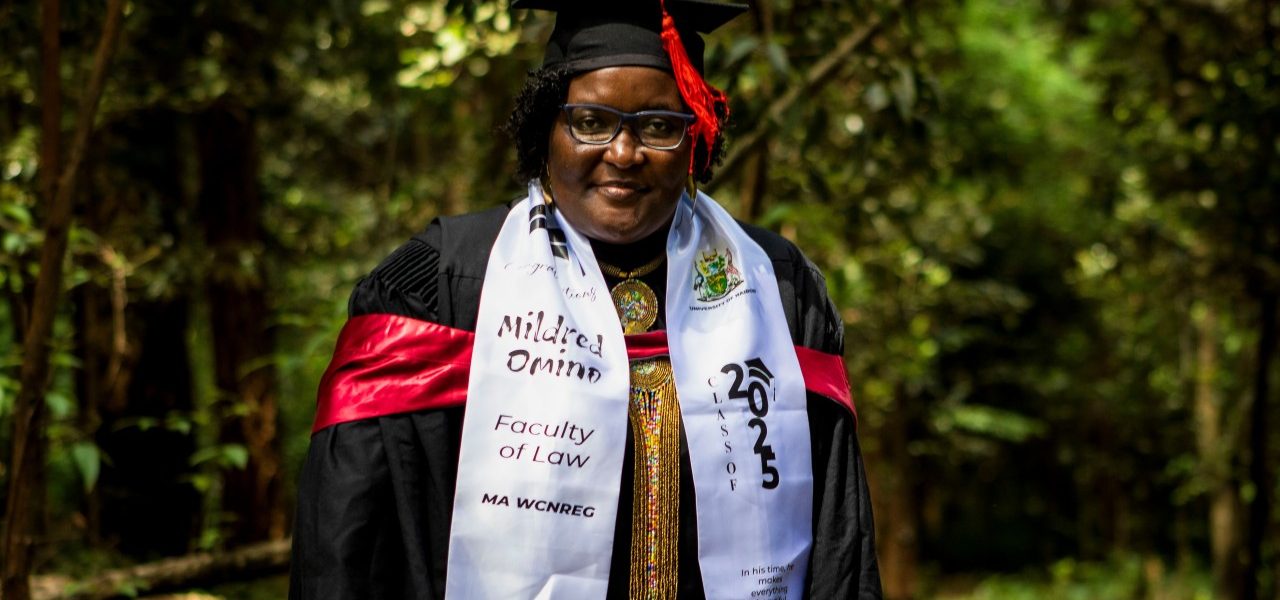
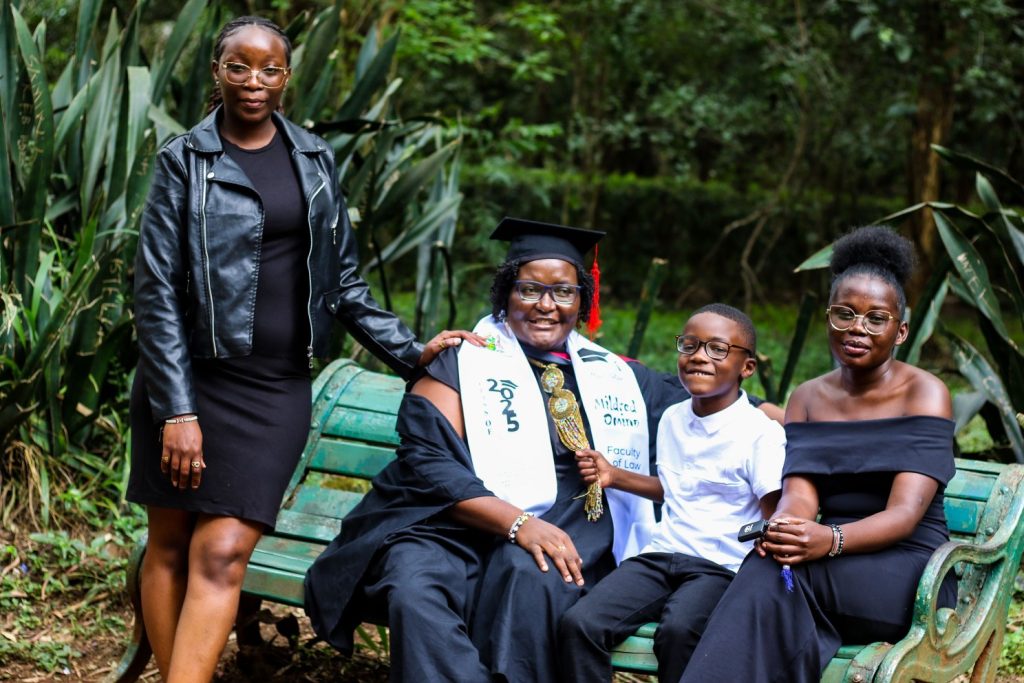
In the middle of my deep reflections both on the alternative report to CESCR committee and the glaring fish shortage in my rural home, I saw a call for scholarships targeting University of Nairobi, University of Malawi and University of Zimbabwe. The program was Masters in Women, Children and Nature Rights in Environmental Governance (MA – WCRNEG). I didn’t think twice, I knew the program was for me and I quickly put in my scholarship application. I was successful! I was accepted in the first cohort of the program which begun in September, 2023 culminating in to a colorful graduation on 11th December 2025. I captured my reflections at the beginning of the program in the piece titled “Taking My Curiosity to the Classroom!”.
WCNREG Knowledge Co-creation and Transformation
Being the inaugural cohort, we were ideally the guinea pigs so to speak. Our faculty did a splendid job in grounding us on the program focus. In all our undertakings, we sought knowledge on how to decolonize, to green and to engender Environmental Governance. Our Multidisciplinary program brought together lawyers, environmental scientists, policy makers, Administrators, communication professionals, conservationists, educators, advocates for children rights, women rights and nature rights. We explored various knowledge systems, including indigenous, scientific and mixed knowledge systems. We had different perspectives on environmental governance; including those of pastoralists, urbanists and indigenous communities.
As Carl Seger puts it, interdisciplinary communication is where truly great ideas emerge. We acknowledged our blind spots and embraced innovative knowledge approaches that combine different models for holistic solutions to complex environmental problems. We harnessed from the different lenses that our disciplines offer, challenged and inspired each other through knowledge co-creation.
We gathered virtually and in-person over the two years to unpack concepts, analyze knowledge systems, policies, laws and share our learnings on women, children and nature’s rights in environmental governance. I enjoyed the insights on scientific knowledge for policy advocacy and the intellectual debates on science policy interface. Thought provoking discussions on urbanization and sustainability and the place of rights of nature, rights of women and rights of children in environmental governance. The gap in law and practice. Our lived experiences versus the promise of law and policy. The critical analysis of frameworks of environmental governance and the reality that laws alone are not sufficient in governing the environment.
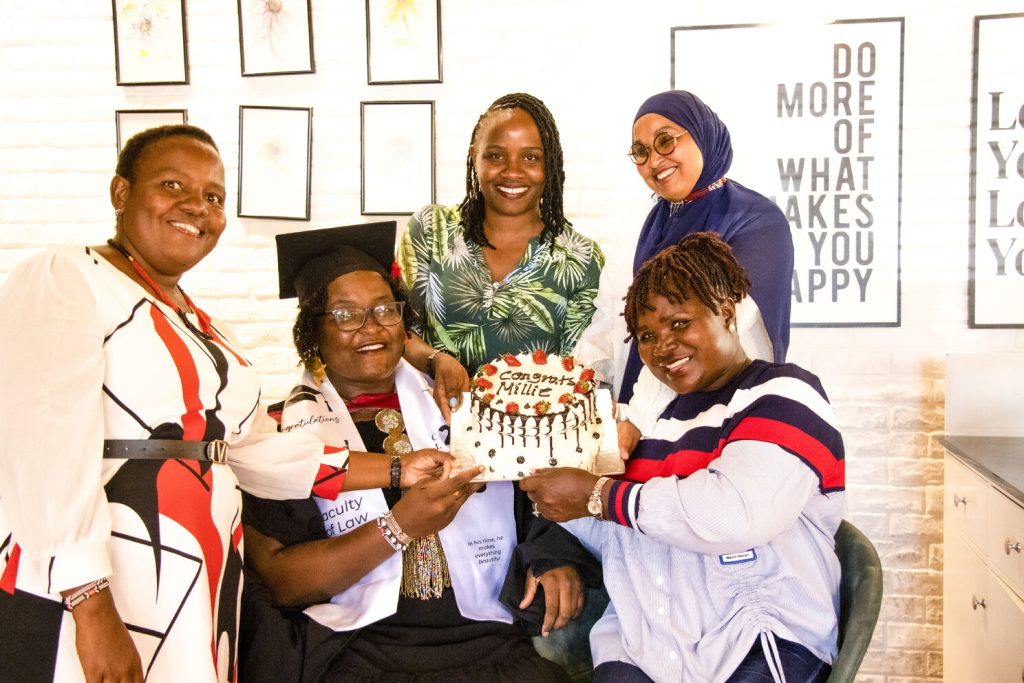
To sum it up, I made my knowledge contribution in decolonizing, greening and engendering environmental governance. One that is centered on participation of women with disabilities in urban governance. An examination of urban governance frameworks in Nairobi City vis a vis participation of women with disabilities. I am super excited that I can tease out some of the research findings as we develop the policy recommendations on social justice and participation towards the just city as envisaged by the second cohort of Future Cities go Glocal program which I am honored to participate in.
The new knowledge acquired feels like the taste of well-cooked indigenous vegetables in the traditional African pot, mixed with traditional preservatives, traditional, cheese, fermented milk and allowed to ferment before it is served. One that is to be consumed and shared for nourishment and well being of the larger community.